| The Home page of ILPI's Safety Data Sheet (SDS) Resource, the leader in SDS information since 1995! | |
| The history and philosophy behind this resource. | |
| A curated collection of books and reference materials concerning Safety Data Sheets and closely related topics. | |
| Paste your plain text SDS into the SDS-Demystifier, and it will be converted into a hypertext-enriched document with links to detailed explanations of each key term. | |
| An extensive list of frequently asked questions about Safety Data Sheets including regulations, content, compliance, and more. | |
| A humorous take on Safety Data Sheet jargon. Fill in the blanks on our entry form to generate a personalized Unsafety Data Sheet to share with your coworkers. | |
| Since 1995, we've maintained this massive curated list of the best places to find Safety Data Sheets on the Internet. | |
| Way more than a glossary, this hypertext-enhanced resource covers hundreds of SDS-related terms and expert knowledge. Each entry includes both the SDS relevance and links to additional authoritative resources. | |
| Archived results of Safety Data Sheet related polls taken by some of our millions of site visitors | |
| You are here! The OSHA regulations behind SDS regulations, including the inspection guidelines and over 400 official interpretations letters under the Hazard Communication Standard | |
| Commercial suppliers of SDS authoring and management software as well as cloud compliance services. | |
| Commercial companies that will create SDS's for your specific needs as well as SDS translation companies. |

Safety signs, banners, and scoreboards? Get yours at Safety Emporium!
OSHA Hazard Communication Letters of Interpretation
Employers responsibilities under HCS 2012 to classify hazards and create SDSs for products whose manufacturers are no longer in business.
- Issued
- Record type
- Interpretation
- Historical standard
- HCS 2012 (historical)
- Current standard
- HCS 2024, as amended
ILPI assessment: Generally consistent with the current HCS
An employer using an old product does not automatically become responsible for authoring an SDS merely because the manufacturer has closed. This letter permits retaining the latest received MSDS for the described old stock. The employer still needs an effective HazCom program, readily accessible hazard information and employee training; see the SDS FAQ on missing sheets.
The June 2015 dates are historical HCS 2012 implementation dates, not today’s compliance deadlines. A newly received SDS belongs in the current-access system, but replacing the working copy does not by itself authorize discarding exposure records: 1910.1020 retention rules may apply. Employers voluntarily preparing SDSs are responsible for their content.
Last reviewed: .
About this ILPI assessment
This comparison with current requirements is not a finding that OSHA has formally withdrawn this letter. This assessment reflects editorial judgment informed by human review and AI assistance. It is an opinion, may contain errors or omissions, and is not an official OSHA determination. For guidance on how OSHA requirements apply to your circumstances, contact your local OSHA office.
OSHA's notice about interpretation letters
The following notice is published on OSHA's interpretation pages; it is general guidance, not a letter-specific withdrawal notice.
OSHA requirements are set by statute, standards and regulations. Our interpretation letters explain these requirements and how they apply to particular circumstances, but they cannot create additional employer obligations. This letter constitutes OSHA's interpretation of the requirements discussed. Note that our enforcement guidance may be affected by changes to OSHA rules. Also, from time to time we update our guidance in response to new information. To keep apprised of such developments, you can consult OSHA's website at https://www.osha.gov.
Source: OSHA's original letter page.
January 31, 2013
Mr. Joel Gregier
Lion Technology Inc.
21 Sunset Inn Road
Lafayette, NJ 07848
Dear Mr. Gregier:
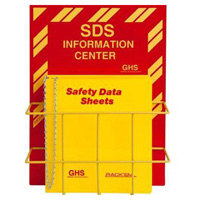
Your employees can stay informed and safety-ready with right to know stations and labels from Safety Emporium.
Thank you for your September 19, 2012, letter to the Occupational Safety and Health Administration (OSHA). Your letter was referred to OSHA's Directorate of Enforcement Programs for a response to your specific question regarding the revised Hazard Communication standard (HCS 2012 [ILPI: Original HCS 2012 context · Current HCS] ), 29 CFR 1910.1200. This letter constitutes OSHA's interpretation only of the requirements herein, and may not be applicable to any questions not delineated within your original correspondence. Your paraphrased question and our response are below.
Question 1: The HCS 2012 [ILPI: Original HCS 2012 context · Current HCS] requires manufacturers, importers, distributors and employers to be in compliance with the revised provisions by June 1, 2015. This includes having Safety Data Sheets (SDSs) instead of Material Safety Data Sheets (MSDSs). Sometimes employers have products from manufacturers or importers who have gone out of business. Do employers need to classify these hazardous chemicals and create an SDS for these products?
Response: The responsibilities of the employer have not changed under the HCS 2012 [ILPI: Original HCS 2012 context · Current HCS] . Under section 1910.1200(g)(1) [ILPI: Original HCS 2012 context · Current HCS] and (8) [ILPI: Original HCS 2012 context · Current HCS], employers must have and maintain SDSs and make them available to their employees. Under paragraph (g)(1), chemical manufacturers and importers must develop or obtain SDSs for the products they produce or import. In the scenario you raise where the manufacturer has gone out of business, the employer's responsibility is to maintain the MSDS for that product, not to create a new SDS. OSHA will not cite companies for maintaining MSDSs when these products were received prior to June 1, 2015. However, OSHA still requires employers to maintain the most recently received version of the MSDS or SDS. Therefore, when an SDS is received, it must replace the MSDS for the corresponding hazardous chemical. Also, when more current revisions of the MSDS or SDS are received, the employer must replace the older versions of the MSDS or SDS.
[ILPI note: At issuance: HCS 2012. Keep the latest available sheet accessible under paragraph (g)(8). Replacing a current-use copy is separate from historical exposure-record retention.]
Employers may contact manufacturers or distributors of products they have previously ordered to request new SDSs, and under section 1910.1200(g)(6)(iv) [ILPI: Original HCS 2012 context · Current HCS], the SDSs must be provided. However, the HCS 2012 [ILPI: Original HCS 2012 context · Current HCS] does not require employers to contact the manufacturers, importers, or distributors for SDSs for products they have not recently received. An employer that is maintaining an MSDS for a product not recently received would be considered to be compliant with the HCS 2012 [ILPI: Original HCS 2012 context · Current HCS] . Be aware that any product received on or after June 1, 2015, must be shipped with an SDS, and when a new SDS is received, it must be maintained.

Protect your workers with ADA-compliant safety stations from Safety Emporium.
Please note that while the employer is under no obligation to create an SDS for a hazardous chemical in situations where the manufacturer or importer has gone out of business, if it chooses to generate a new SDS, the employer will become the responsible party for its content.
Finally, where an employer is maintaining MSDSs in addition to SDSs, the employer's Hazard Communication program, as required by 29 CFR 1910.1200(e)(1) [ILPI: Original HCS 2012 context · Current HCS], and information and training program, as required by 29 CFR 1910.1200(h)(1) [ILPI: Original HCS 2012 context · Current HCS], must reflect this. This ensures that employees are aware of potential differences between MSDSs and SDSs and how to utilize both the MSDSs and the SDSs.
Thank you for your interest in occupational safety and health. We hope you find this information helpful. OSHA's requirements are set by statute, standards, and regulations. Our letters of interpretation do not create new or additional requirements but rather explain these requirements and how they apply to particular circumstances. This letter constitutes OSHA's interpretation of the requirements discussed. From time to time, letters are affected when the Agency updates a standard, a legal decision impacts a standard, or changes in technology affect the interpretation. To assure that you are using the correct information and guidance, please consult OSHA's website at https://www.osha.gov. If you have further questions, please feel free to contact the Directorate of Enforcement Programs at (202) 693-2100.
Sincerely,
Thomas Galassi, Director
Directorate of Enforcement Programs
The original official public domain version of this document is available from OSHA at https://www.osha.gov/laws-regs/standardinterpretations/2013-01-31.