| The Home page of ILPI's Safety Data Sheet (SDS) Resource, the leader in SDS information since 1995! | |
| The history and philosophy behind this resource. | |
| A curated collection of books and reference materials concerning Safety Data Sheets and closely related topics. | |
| Paste your plain text SDS into the SDS-Demystifier, and it will be converted into a hypertext-enriched document with links to detailed explanations of each key term. | |
| An extensive list of frequently asked questions about Safety Data Sheets including regulations, content, compliance, and more. | |
| A humorous take on Safety Data Sheet jargon. Fill in the blanks on our entry form to generate a personalized Unsafety Data Sheet to share with your coworkers. | |
| Since 1995, we've maintained this massive curated list of the best places to find Safety Data Sheets on the Internet. | |
| Way more than a glossary, this hypertext-enhanced resource covers hundreds of SDS-related terms and expert knowledge. Each entry includes both the SDS relevance and links to additional authoritative resources. | |
| Archived results of Safety Data Sheet related polls taken by some of our millions of site visitors | |
| You are here! The OSHA regulations behind SDS regulations, including the inspection guidelines and over 400 official interpretations letters under the Hazard Communication Standard | |
| Commercial suppliers of SDS authoring and management software as well as cloud compliance services. | |
| Commercial companies that will create SDS's for your specific needs as well as SDS translation companies. |

Safety signs, banners, and scoreboards? Get yours at Safety Emporium!
OSHA Hazard Communication Letters of Interpretation
Abortion clinics do not comply with OSHA regulations and guidelines.
- Issued
- Record type
- Interpretation
- Historical standard
- HCS 1994, pre-GHS archive
- Current standard
- HCS 2024, as amended
ILPI assessment: Healthcare coverage remains; title is a question, not a finding about clinics
This letter addresses the obsolete 1994 version of the Hazard Communication Standard (HCS). Its main HazCom conclusion remains consistent: covered healthcare employers, including abortion clinics, must comply with applicable chemical and biological hazard requirements. The historical title reports the constituent's allegation; OSHA's reply does not establish that any named facility violated the law.
Under the current HCS, apply coverage, program, immediate SDS access (FAQ) and current information and training requirements, alongside applicable bloodborne-pathogen requirements. Current inspection priorities put imminent danger first; the letter's reversed first-two-priority list is not current guidance. Use OSHA's current complaint process and office directory, not the historical local contact details.
Last reviewed: .
About this ILPI assessment
This comparison with current requirements is not a finding that OSHA has formally withdrawn this letter. This assessment reflects editorial judgment informed by human review and AI assistance. It is an opinion, may contain errors or omissions, and is not an official OSHA determination. For guidance on how OSHA requirements apply to your circumstances, contact your local OSHA office.
OSHA's notice about interpretation letters
The following notice is published on OSHA's interpretation pages; it is general guidance, not a letter-specific withdrawal notice.
OSHA requirements are set by statute, standards and regulations. Our interpretation letters explain these requirements and how they apply to particular circumstances, but they cannot create additional employer obligations. This letter constitutes OSHA's interpretation of the requirements discussed. Note that our enforcement guidance may be affected by changes to OSHA rules. Also, from time to time we update our guidance in response to new information. To keep apprised of such developments, you can consult OSHA's website at https://www.osha.gov.
Source: OSHA's original letter page.
December 13, 1994
The Honorable J. Bennett Johnston
United States Senate
Washington, D.C. 20510
Dear Senator Johnston:

Safety Emporium carries bloodborne pathogen compliance centers and related compliance materials.
Thank you for your letter of October 27, on behalf of your constituent, Mrs. James Hannie of Baton Rouge, Louisiana.
Mrs. Hannie wrote to your questioning why abortion clinics do not comply with the Occupational Safety and Health Administration (OSHA) regulations and guidelines as other doctors and hospitals are required to.
OSHA inspections are based upon (in order of priority), a worker fatality or catastrophe, knowledge of an imminent danger situation affecting employees, a compliant or referral, and our general schedule targeting system.
[ILPI note: At issuance: HCS 1994, pre-GHS archive. Use the current Field Operations Manual priorities: imminent danger first, then fatalities/catastrophes, complaints/referrals and programmed inspections. Historical priority wording is retained below as part of the letter.]
Abortion clinics, like other healthcare facilities are covered by, and must comply with all applicable OSHA safety and health standards. If there are clinics that your constituent is familiar with that are not in compliance with OSHA regulations it is likely that they have not yet been inspected under one of the above procedures. Your constituent has the right to file a non-formal complaint regarding the alleged hazards. A nonformal complaint is a compliance procedure whereby a compliant can be filed against a facility by someone that does not work there. The complaint is handled by letter with a written response required. An inspection by an OSHA compliance officer can be conducted if the written response is inadequate or if no response is received within the required time period.
If your constituent is interested in filing such a compliant she can contact the local area office at:
U.S. Department of Labor - OSHA
2156 Wooddale Blvd.
Hoover Annex, Suite 200
Baton Rouge, LA 70806
504-389-0474
For your information, the OSHA regulations most commonly violated in the healthcare industry include the bloodborne pathogens and the hazard communication [ILPI: Original HCS 1994 context · Current HCS] standards. The bloodborne pathogens standard addresses the broad issue of occupational exposure to blood and other potentially infectious materials. Covered under this standard are requirements for worker education and training, hepatitis B vaccination, personal protective equipment, engineering and administrative controls, infectious waste disposal, and so forth. The hazard communication standard addresses worker exposure to hazardous chemicals. Covered under this standard are requirements for a written program, chemical labeling, providing material safety data sheets on all hazardous chemicals, and employee training.
We hope this information is responsive to your concerns and the concerns of your constituent. Thank you for your interest in worker health and safety.
Sincerely,
Joseph A. Dear Assistant Secretary
October 27, 1994
Ms. Geri Palast
Department of Labor Congressional Affairs
200 Constitution Avenue, N.W.
Washington, D.C. 20210
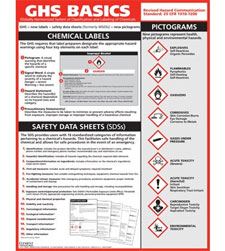
Ensure your workers are trained with safety posters and more from Safety Emporium.
Dear Ms. Palast:
Because of my desire to be responsive to all inquiries, I respectfully request your consideration of the enclosed material.
I will appreciate your findings and views, in duplicate form, along with the return of the enclosures by November 28, 1994.
With kindest regards, I am.
Sincerely,
J. Bennett Johnston United States Senator
JBJ/etr Enclosure
The original official public domain version of this document is available from OSHA at https://www.osha.gov/laws-regs/standardinterpretations/1994-12-13-0.